
Crossroads Gold Defines District-Scale Hydrothermal Gold System and Identifies Multiple Untested Targets at Pambula Gold Project
Vancouver, British Columbia--(Newsfile Corp. - June 25, 2026) - Crossroads Gold Corp. (TSXV: CRG) (OTCQB: CRGCF) (FSE: FI1) ("Crossroads" or the "Company") announces the completion of a comprehensive historical data compilation and geological reinterpretation for the Pambula Gold Project (the "Pambula Project") in New South Wales, Australia. The work integrates mining records, Geological Survey data, structural interpretations and historical production information into a modern exploration framework (Figure 1).
Mr. Rex Motton, CEO & Director of Crossroads, commented, "Pambula is emerging as a compelling district-scale gold system, with strong indications of structural continuity and sulphide-hosted mineralization that present an excellent opportunity for systematic exploration. Although historical mining achieved excellent recovered grades of an estimated 30 g/t Au, modern exploration has been minimal, with most work in the 1980s focused on shallow, open-pit concepts. As a result, significant potential remains for deeper drilling targeting sulphide-hosted mineralization. Historical evidence suggests the field's decline was driven more by metallurgical limitations and lack of capital — not because the geological system was depleted. Modern exploration methods and contemporary sulphide-processing technologies offer the potential to unlock substantial value across this underexplored district."
The review indicates that the Pambula Goldfield, which produced more than 40,000 oz of gold at recovered grades of an estimated 30 g/t Au, remains significantly underexplored. Only 32 historical drill holes (2,515m total) have tested the Pambula Goldfield, with the deepest hole reaching 271m (DDH-P7) and no drilling below 230m vertical depth (Figure 2).
Key findings:
Broad, continuous gold mineralization at depth, highlighted by hole DDH-P7 returning 16m at 2.36 g/t Au from 94m, including 5m at 6.62 g/t Au, with no follow-up drilling completed on the main Victory ore shoot (Figure 3).
Untested deep structural targets, including a feeder-zone target at 400m depth and an additional similar style Crossroads-defined target at approximately 250-300m depth.
Evidence of a large, structurally controlled hydrothermal system, including east-dipping lodes, brecciated corridors, sulphide-associated mineralization and north-plunging high-grade shoots.
Increasing sulphide and arsenopyrite mineralization with depth, consistent with deeper sulphide-hosted gold systems in southeastern Australia.
Uncharacterized silver and antimony potential, with historical references to electrum, silver sulphosalts and stibnite but no systematic modern analysis.
The reinterpretation suggests continuity between several major historical mines and highlights multiple district-scale targets beyond the historical workings, including the PRC32 magnetic anomaly, Hidden Treasure, Morning Star, Diorite structures and the Southern Yowaka corridor.
Crossroads plans to integrate the compiled dataset into modern GIS and 3D models to support systematic exploration, including structural modelling, geochemistry, geophysics and deeper drilling.
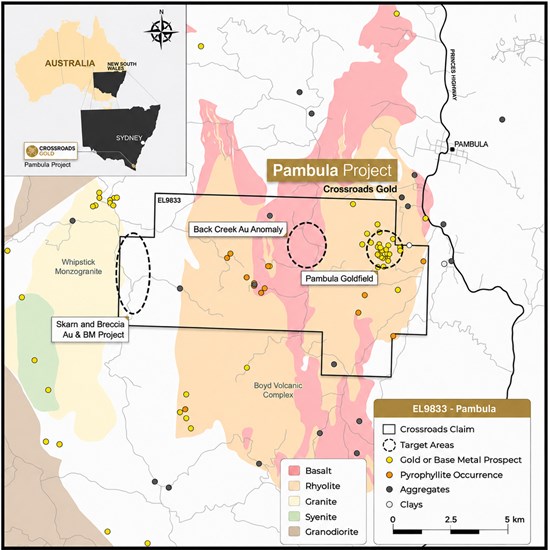
Figure 1 - Pambula Project Map
To view an enhanced version of this graphic, please visit:
https://images.newsfilecorp.com/files/12063/302839_6c20b83114ff8882_002full.jpg
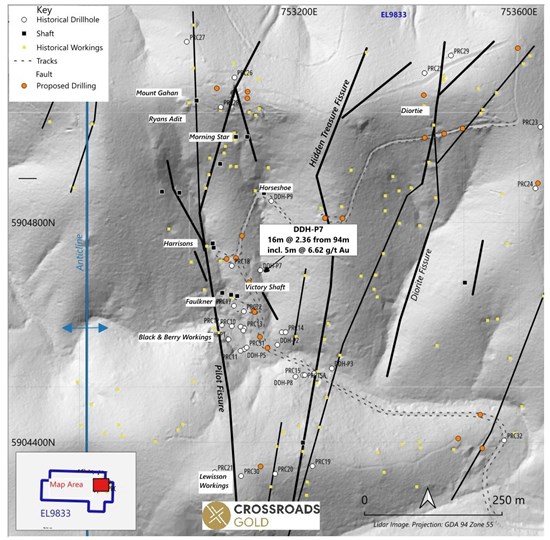
Figure 2 - Pambula Goldfield Map
To view an enhanced version of this graphic, please visit:
https://images.newsfilecorp.com/files/12063/302839_6c20b83114ff8882_003full.jpg
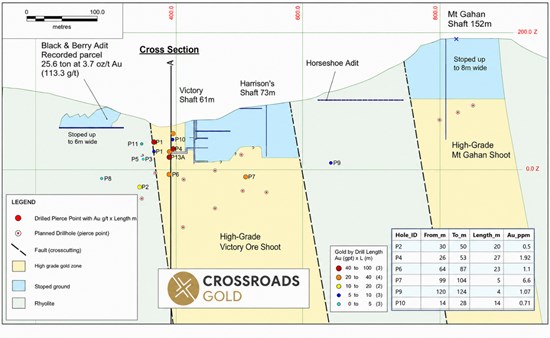
Figure 3 - Pilot Fissure Long Section Interpretation
To view an enhanced version of this graphic, please visit:
https://images.newsfilecorp.com/files/12063/302839_6c20b83114ff8882_004full.jpg
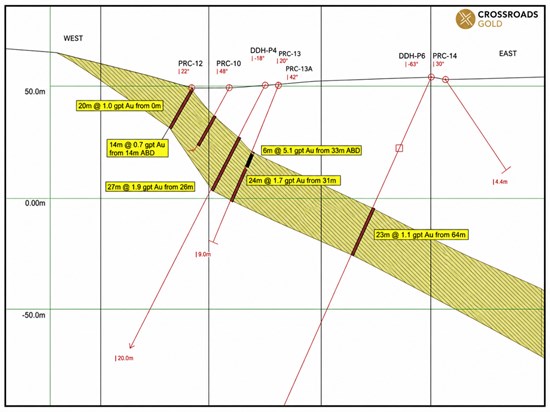
Figure 4 - Pilot Fissure Cross Section
To view an enhanced version of this graphic, please visit:
https://images.newsfilecorp.com/files/12063/302839_6c20b83114ff8882_005full.jpg
Historical Data Reconstruction
The Company's review indicates that the Pambula Goldfield developed within multiple north-south fracture corridors hosted in felsitic volcanic rocks associated with the Eden Rhyolite sequence. Historical Geological Survey records and mining reports consistently describe:
- east-dipping lode systems;
- broad brecciated hydrothermal corridors;
- pyrite and arsenopyrite-associated mineralization;
- structurally controlled bonanza-grade shoots; and
- increasing sulphide mineralization with depth.
The reinterpretation indicates that historical mining focused on isolated high-grade shoots within a much larger hydrothermal system. Records describe underground development to an estimated 150m depth, with repeated references to widening ore zones and improving continuity at depth. The study also highlights significant unrecovered gold in historical tailings and sulphide concentrates, reflecting refractory mineralization and the metallurgical limitations of nineteenth-century operators—issues that modern processing technologies are now capable of addressing.
Historical Drill Results
Historical drilling at Pambula was limited and largely restricted to shallow tests around known workings in search of potential open-cut opportunities. The key result from the dataset demonstrates broad, continuous gold mineralization at depth—an area that remains completely untested by modern exploration methods.
Hole DDH-P7 - Key Historical Intercept
Hole DDH-P7 returned 16m grading 2.36 g/t Au, including a higher-grade interval of 5m at 6.62 g/t Au. This intercept illustrates the potential for a broad zone of continuous gold mineralization at depth and represents one of the most significant results in the historical drilling record because it is the only drill hole in the central part of the Victory ore shoot that is below the old workings. No follow-up drilling was completed in the immediate footprint of this intercept, and the zone remains open at depth below approximately 100m vertically.
Untested Deep Exploration Target
Multiple modern studies have projected the intersection of the Pilot Fissure with the Hidden Treasure and Killaloe fissures at depth as a potential bonanza-grade target. A 2018 review by Sapphire Resources identified a discrete deep structural target interpreted as a feeder zone to the broader system, based on structural modelling, lode-trend projections and historical high-grade production. Sapphire proposed a drill hole to test the down-dip projection at approximately 400m, but the target was never drilled and remains untested. Crossroads' updated geological modelling places this high-priority target at approximately 250-300m depth from accessible drill sites near former hole DDH-P7, and it is planned for the second round of drilling. These deep targets represent the first systematic testing of the interpreted lode system at depths consistent with high-grade ore shoots in comparable southeastern Australian gold systems.
Silver
Historical mining records document silver-rich sulphide mineralization associated with primary gold lodes at several mines across the Pambula Goldfield, including electrum and silver sulphosalt occurrences. Despite silver being referenced in multiple historical accounts, no systematic modern assay program for silver has been completed across the drilling dataset, with arsenic and antimony only analyzed in three historical holes. The potential scale and grade of silver within the system remains wholly uncharacterized.
Antimony
Antimony-bearing sulphides, including stibnite, have been identified in historical records at Pambula in association with primary gold mineralization. Given the current focus on antimony as a strategic critical mineral across multiple jurisdictions including Australia and Canada, the Company intends to systematically assess antimony and silver potential as part of its planned drill program at Pambula. No modern multi-element analysis for these elements has previously been undertaken.
Gold-Pathfinder Elements
A modern multi-element reassay program targeting arsenic, bismuth, tellurium and other gold-pathfinder elements could provide a materially improved understanding of the zonation and structural architecture of the system. Historical assay programs were generally single-element gold-only programs that would not have captured the broader geochemical signature now recognized as indicative of significant hydrothermal gold systems in southeastern Australia.
Structural and Exploration Implications
The reinterpretation provides an important framework for future exploration targeting across the Pambula Project. The Company intends to integrate the historical data into modern GIS and 3D geological modelling platforms to support future targeting and drill planning.
Several structural features identified in the study — including parallel lodes, branching fracture systems, crosscourse offsets and plunge-controlled ore shoots — are considered highly prospective targets for modern exploration techniques.
The Company believes that the broader district remains underexplored by modern standards, particularly with respect to:
- systematic geochemistry;
- modern geophysics;
- structural modelling; and
- deeper drill testing of sulphide-hosted mineralization.
Beyond the deep targets described above, the Company has identified five initial separate exploration targets across the district that demonstrate scale beyond the historical workings, including the Eastern Fissure (including the PRC32 magnetic anomaly), the Hidden Treasure, Morning Star and Diorite structures, and the Southern Yowaka corridor. Other gold workings occur outside the central area but have not yet been assessed.
Technical Information
The historical information referenced in this release is derived from historical mining records, Geological Survey reports, historical production records, metallurgical descriptions and other publicly available archival sources. Historical results, production figures and grades referenced in this release have not been independently verified by the Company and should not be relied upon as indicators of future exploration success.
The Company cautions investors that historical information is considered conceptual in nature and insufficient work has been completed to verify the historical data. A qualified person has not completed sufficient work to classify the historical information as current mineral resources or mineral reserves, and the Company is not treating the historical information as current mineral resources or mineral reserves.
Qualified Person
The scientific and technical information contained in this news release was reviewed and approved by Mr. Neil Motton, who is a "Qualified Person" (as defined in National Instrument 43-101 - Standards of Disclosure for Mineral Projects). Mr. Motton is the CEO and a Director of the Company and therefore is not considered independent of the Company in accordance with National Instrument 43-101 - Standards of Disclosure for Mineral Projects. Mr. Motton has visited the Pambula Project discussed in this disclosure.
About Crossroads Gold
Crossroads Gold is a Canadian gold exploration company backed by the Fiore Group and focused on high-potential gold projects in southeastern Australia—one of the world's premier gold-producing jurisdictions. The Company aims to deliver new gold discoveries in a Tier-1 jurisdiction while generating long-term value for shareholders. Crossroads' portfolio includes the Pambula Gold Project, the Steiglitz Gold Project, the Pheasant Creek Project, and the Club Terrace Project.
Crossroads is led by an experienced management and technical team with deep Australian and global discovery expertise. Crossroads is supported by excellent infrastructure, year-round access, and a stable regulatory framework to systematically advance its projects with modern exploration and drilling aimed at unlocking meaningful gold discoveries. Crossroads is committed to responsible resource development, proactive and open communication, and transparent and inclusive dialogue with regional communities, indigenous organizations and all stakeholders. Crossroads is committed to proactive decision-making and creating economic opportunities for all stakeholders, including the communities it operates in.
On behalf of the Board of Directors of Crossroads,
Mr. Neil (Rex) Motton
CEO & Director
Crossroads Gold Corp.
T: +1 778 949 3691
Email: [email protected]
www.crossroadsgold.com
Neither the TSX Venture Exchange nor its Regulation Services Provider (as that term is defined in the policies of the TSX Venture Exchange) accepts responsibility for the adequacy or accuracy of this release.
Certain statements and information herein, including all statements that are not historical facts, contain forward-looking statements and forward-looking information within the meaning of applicable securities laws. Forward-looking statements relate to future events or future performance and include, but are not limited to, statements regarding: the Company's plans and objectives for the Pambula Gold Project; the integration of historical data into modern geological, GIS and 3D models; the interpretation of historical exploration results; the identification, prioritization and testing of exploration targets; the completion and timing of soil sampling, geochemical, geophysical and drilling programs; the potential continuity, size, depth and grade of mineralized structures; the potential for gold, silver and antimony mineralization; the receipt of regulatory approvals; and the Company's ability to advance the Pambula Gold Project and make new mineral discoveries.
Forward-looking statements are based on management's current expectations, estimates, projections and assumptions, including, but not limited to, assumptions regarding the accuracy and completeness of historical data, the continuity of geological interpretations, the availability of financing, labour, equipment and contractors, the timely receipt of permits and approvals, favourable weather conditions, and general business and economic conditions. Although the Company believes these assumptions are reasonable, they are inherently subject to significant business, economic, geological and competitive uncertainties and contingencies. Although management of the Company believe that the assumptions made and the expectations represented by such statements or information are reasonable, there can be no assurance that forward-looking statements or information herein will prove to be accurate. Forward-looking statements and information by their nature are based on assumptions and involve known and unknown risks, uncertainties and other factors which may cause actual results, performance or achievements, or industry results, to be materially different from any future results, performance or achievements expressed or implied by such forward-looking statements or information.
These factors include, but are not limited to: risks associated with the business of Crossroads given its limited operating history; business and economic conditions in the mineral industry generally; the supply and demand for labour and other project inputs; risks relating to unanticipated operational difficulties (including unanticipated events related to mineral exploration); changes in general economic conditions or conditions in the financial markets; changes in the price of gold and currency exchange; and other risk factors as detailed from time to time.
The Company does not undertake to update any forward-looking information, except in accordance with applicable securities laws.
To view the source version of this press release, please visit https://www.newsfilecorp.com/release/302839
Source: Crossroads Gold Corp.